

Step 1: Find the Bamboo Integration
To get to the Integrations area of Ruddr, simply click on the Settings main nav bar option and then select the Integrations menu option (see Integrations for more information). The Integrations screen is separated into two sections which are Active Integrations and Available Integrations. If you have yet to set up the BambooHR integration, it will be listed in the Available Integrations section. Simply click on the Install button at the bottom of the integration widget (Figure 1).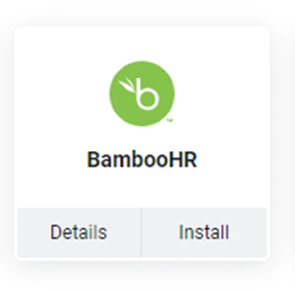
Figure 1 - Click Install to Begin the BambooHR Integration in Ruddr
Step 2: Authorize the Integration
Being logged into BambooHR (having an active browser session) prior to beginning this process ensures a seamless experience with setting up the integration. Also, you will want to ensure that you are setting this integration up using a BambooHR user account with full access to all BambooHR users and time off policies. Once you click on the Install button, you will be presented with a window (Figure 2) that will ask for your BambooHR companydomain.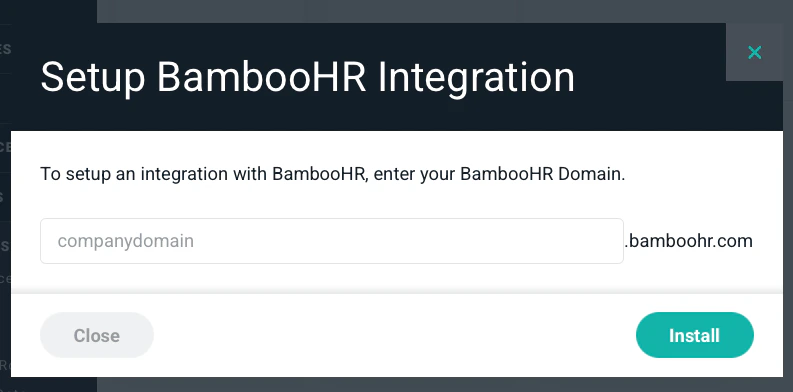
Figure 2 - Begin Setup of Ruddr / BambooHR Integration by Entering BambooHR Integration Requirements
Step 3: Authorize Ruddr and BambooHR access
Once you enter your BambooHR domain, you will be directed to BambooHR to allow Ruddr to access the desired information. (Figure 3) You can customize in this screen the information you would like sent to Ruddr. Once complete, you can select Allow Access and now you are set up with OAuth.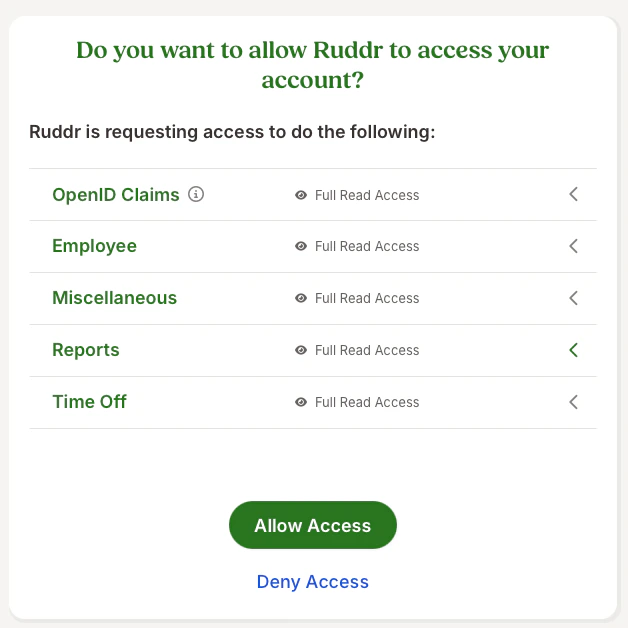
Figure 3 - Allow Ruddr to Access BambooHR data
Step 4: Configure BambooHR Integration Settings
There are a number of BambooHR configuration settings in Ruddr, available from the Settings screen (Figure 4).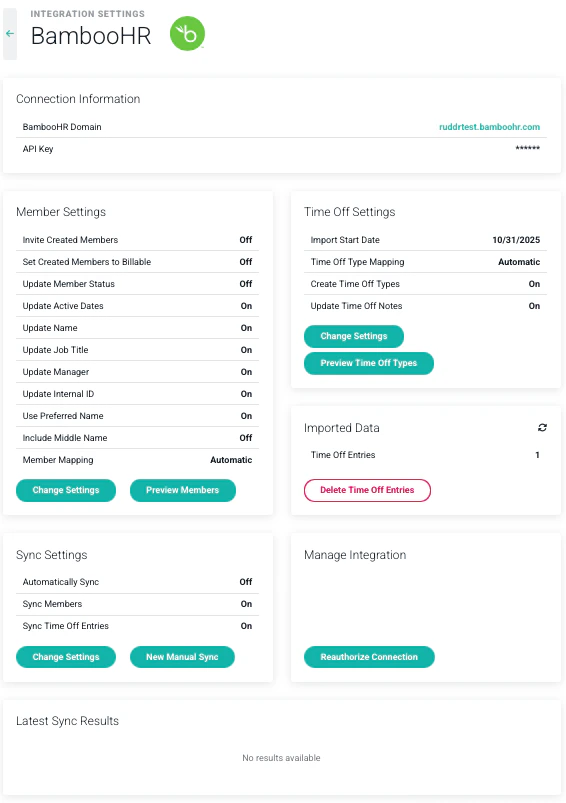
Figure 4 - BambooHR Integration Settings in Ruddr
Figure 5 - BambooHR Integration Widget when Enabled
Member Settings
In the Member Settings section (Figure 6), you can specify how you want the integration to manage Ruddr workspace members and relevant member data fields.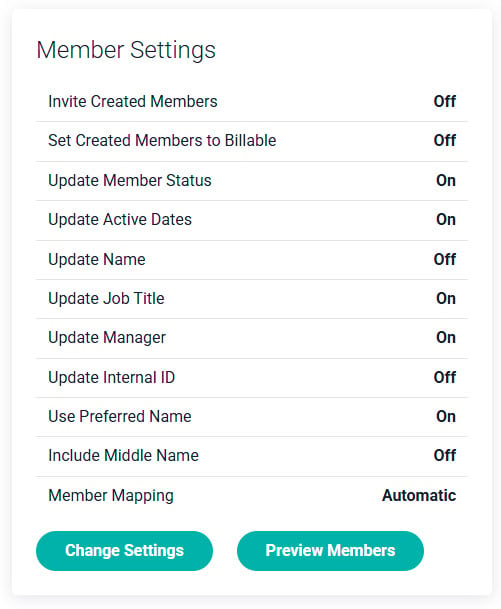
Figure 6 - Member Settings
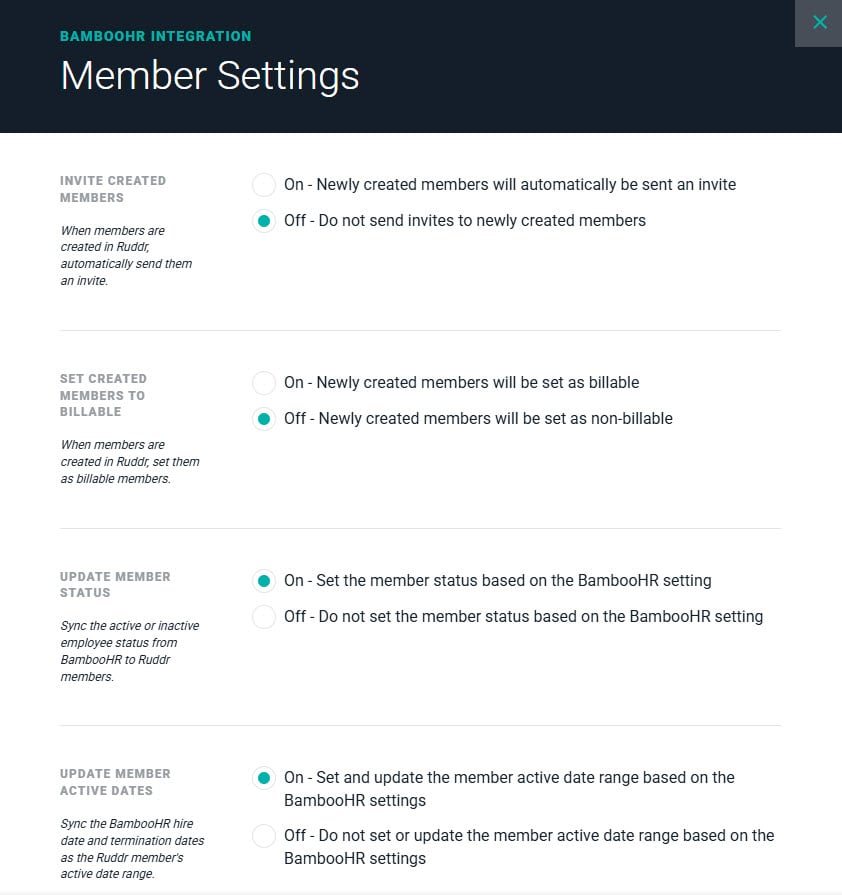
Figure 7 - Manage Member Settings for the Ruddr / BambooHR Integration
- Invite Created Members - by default, the integration is set to create new workspace members in Ruddr but not send invitations to those members. By toggling this setting to On, the integration will automatically send invitations to Ruddr members when they are created in BambooHR. Note that when members are created in Ruddr, their Security Role is set to the default Security Role in the workspace.
- Set Created Members to Billable - by default, Ruddr members that are created by the BambooHR integration are set as non-billable workspace members in Ruddr. Changing this to On will configure all newly created Ruddr members as billable in your workspace.
- Update Member Status - This setting controls whether or not the integration will automatically update a Ruddr member’s status (Active or Inactive) based on the employee status in BambooHR. If an employee in BambooHR is terminated, and this setting is set to On, the integration will automatically deactivate the member in the Ruddr workspace. Conversely, if an inactive employee in BambooHR is reactivated, or a new employee is created, the integration will set this member’s workspace status to Active in Ruddr. By default, this setting is set to Off.
- Update Member Active Dates - enabling this setting will ensure that the BambooHR hire date and termination date will be used as the Ruddr member’s active date and inactive date, respectively.
- Update Member Name - sync the employee name from BambooHR to Ruddr members.
- Update Job Title - this setting allows the integration to sync an employee’s job title from BambooHR to Ruddr members. If the Job Title does not exist as a record in Custom Data, then Ruddr will create the Job Title record.
- Update Manager - if the email of the employee’s manager maps to a Ruddr member, the manager will be set on the employee’s member record.
- Update Internal ID - enabling this setting will sync the employee’s BambooHR employee ID to the Internal ID field on the member profile in Ruddr.
- Member Mapping - This setting controls how the integration maps BambooHR employees to Ruddr members. Provided your workspace members use the same email address in both systems, you can leave this set to Automatic. Setting this to Manual requires you to manually map BambooHR employees to Ruddr members. The default setting is Automatic.
- Successfully mapped members
- Members found in Ruddr but not in BambooHR
- Members found in BambooHR but not in Ruddr
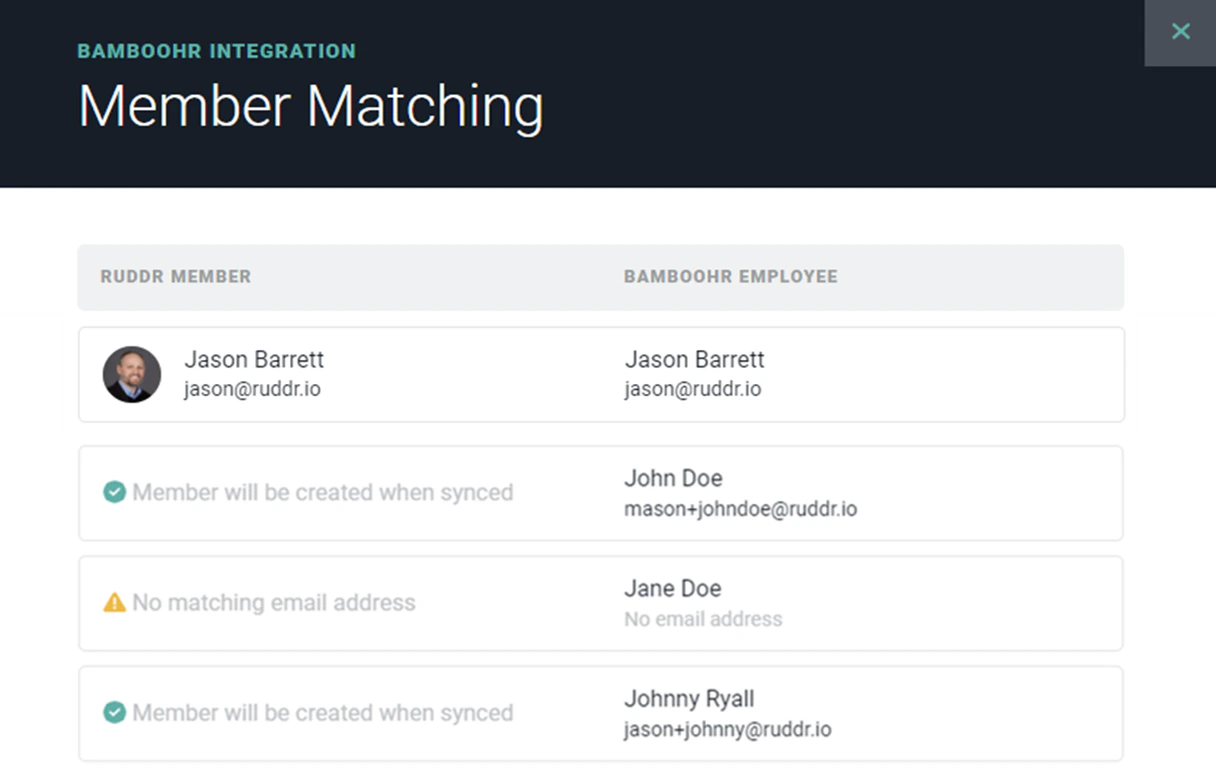
Figure 8 - Member Matching Preview
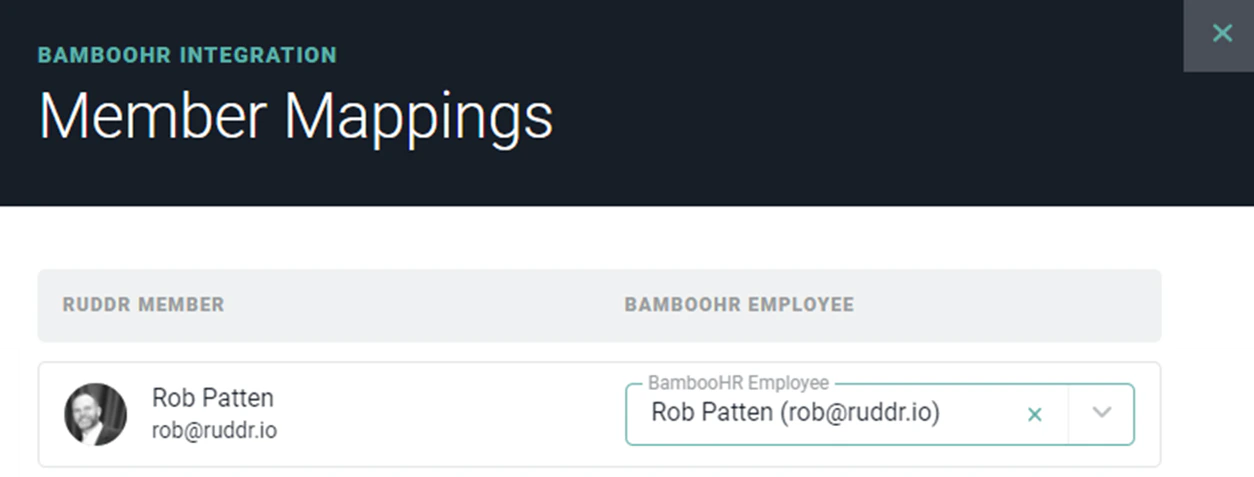
Figure 9 - Manually Map Ruddr Members to BambooHR Users
Time Off Settings
In the Time Off Settings section (Figure 10), you can specify how you want to manage time off time entries from BambooHR.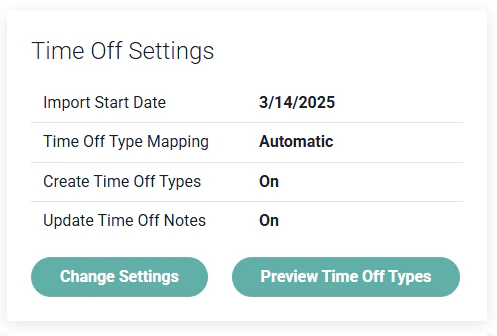
Figure 10 - Time Off Settings
- Import Start Date - Setting this date establishes the first date of time off requests that Ruddr will import from BambooHR. You may prefer to import time off time entries beginning on the date the integration is setup.
- Time Off Type Mapping - In Ruddr and BambooHR, you can specify the types of time off available to employees. For example, you may allow employees to enter Vacation, Sick Leave, or Holiday time. The integration allows for BambooHR time off types to be mapped to Ruddr time off types. Setting this to Manual will allow you to control the mappings between the two systems. The default setting is Automatic.
- Create Time Off Types - The default setting is On. In this case, the integration will map time off types between the two systems when the time off type name is identical. If no match is found, the time off type will be created in Ruddr and the time off entry will be imported. If this setting is switched to Off and the integration does not find a matching time off type, the time off entry will not be imported.
- Update Time Off Notes - Ruddr will sync any description associated with a time off request in BambooHR as Notes on the time entry that gets created. If you do not want these notes to be available on time entries in Ruddr, you can change this setting to Off.
- Successfully mapped types
- Time off types found in Ruddr but not in BambooHR
- Time off types found in BambooHR but not in Ruddr
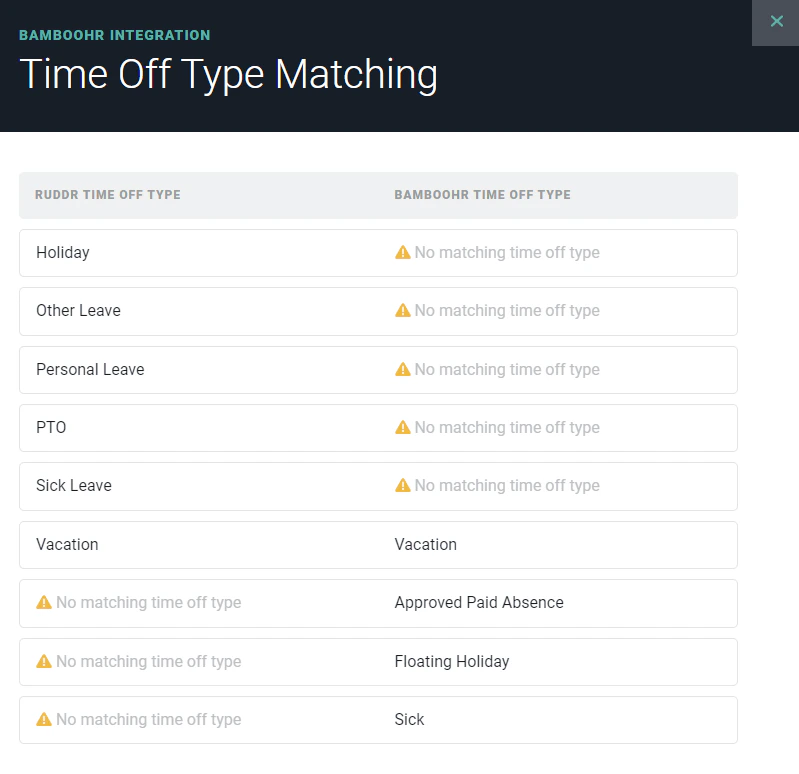
Figure 11 - Time Off Type Matching Preview
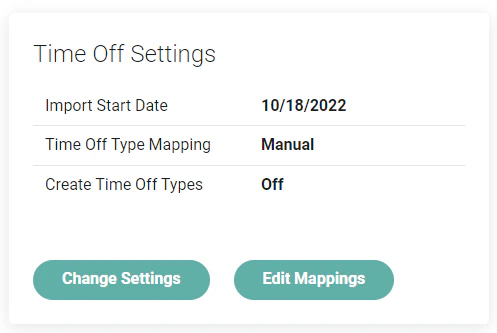
Figure 12 - Edit Time Off Type Mappings when the Setting is Manual
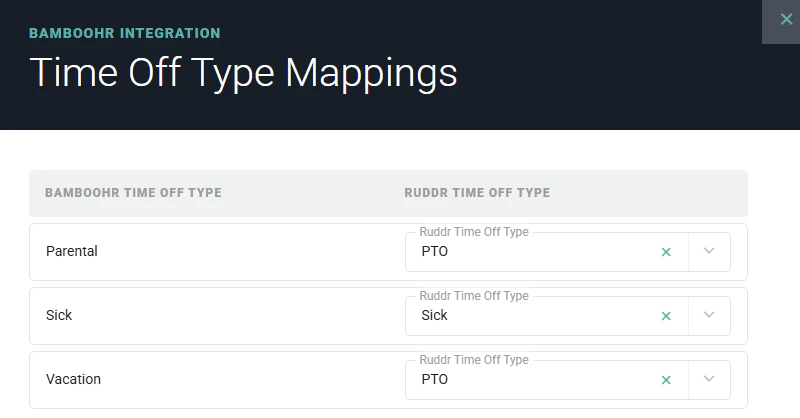
Figure 13 - Manually Map BambooHR Time Off Types to Ruddr Time Off Types
Sync Settings
The final step in the BambooHR integration setup is to configure the sync settings. To do this, click the Change Settings button in the Sync Settings section (Figure 14).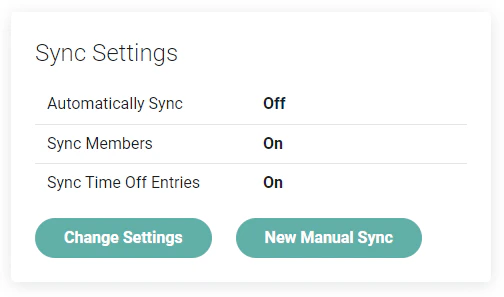
Figure 14 - BambooHR Integration Sync Settings
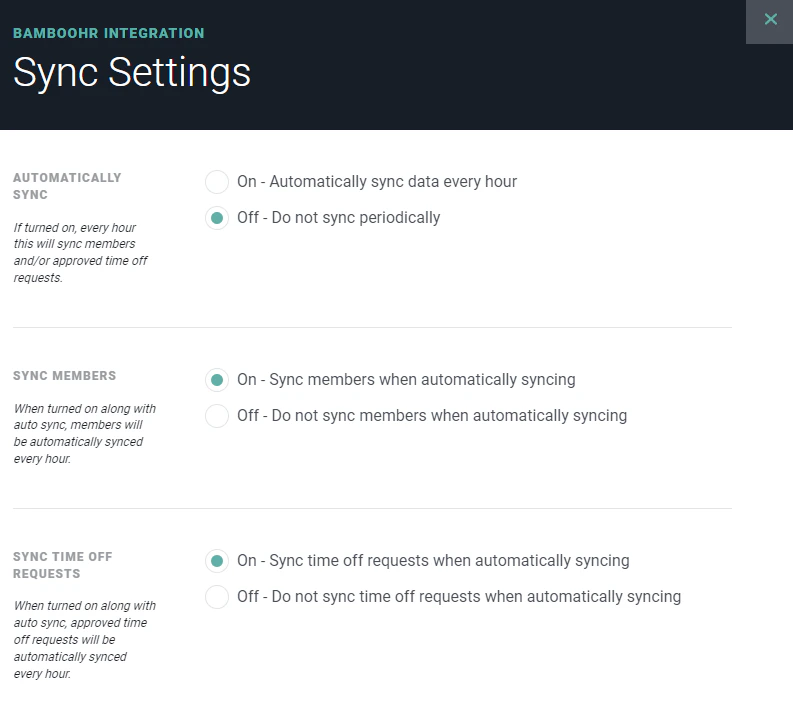
Figure 15 - Manage Ruddr / BambooHR Sync Setting
Imported Data
The Imported Data section (Figure 16) of the BambooHR integration settings shows statistics about the data that has been synchronized from BambooHR to Ruddr. This section also provides a mechanism to delete time off entries that have been synched from BambooHR.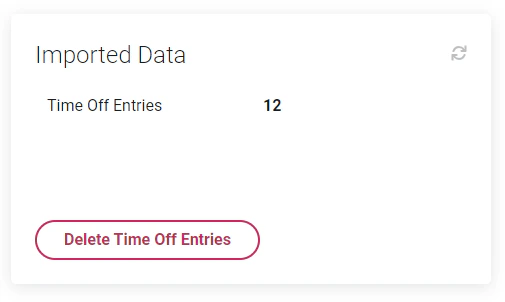
Figure 16 - The Imported Data section Displays Statistics Regarding the Integration
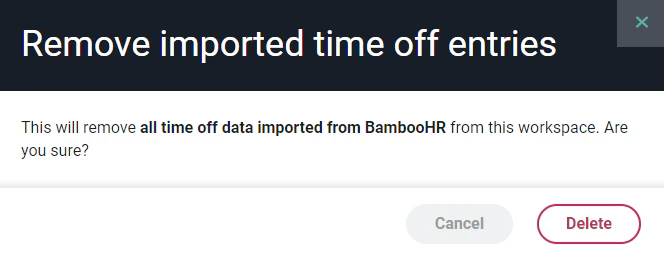
Figure 17 - Confirm your Choice to Delete all Time Entries Created by the BambooHR Integration
Latest Sync Results / Sync Logs
At the bottom of the BambooHR integration settings screen, you will find a log of sync results (Figure 18) for both Manual and Automatic syncs. Clicking on a row in the log will display the details (Figure 19) regarding that synchronization. Viewing these logs can assist the Workspace Admin in evaluating the Ruddr records that have been created by the sync as well as information related to the Member mapping and the Time Off Type mapping.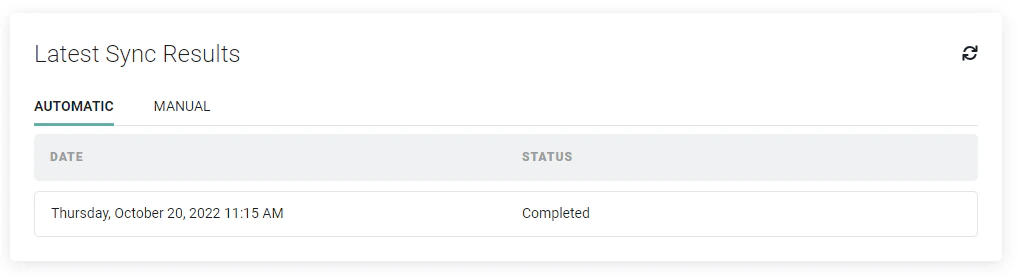
Figure 18 - Detailed Log of Sync Results
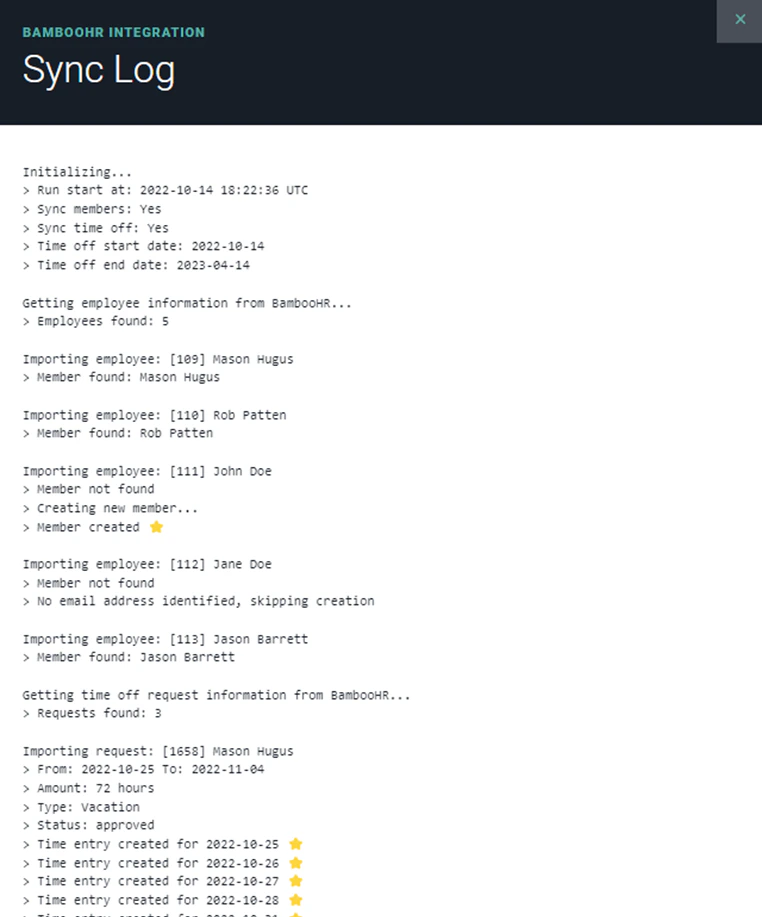
Figure 19 - List of Results for past Synchronizations