> ## Documentation Index
> Fetch the complete documentation index at: https://help.ruddr.io/llms.txt
> Use this file to discover all available pages before exploring further.
# Invoice Settings
The second menu option within the Settings area (Figure 1) is called **Invoices**. This area allows you to configure several invoice defaults.
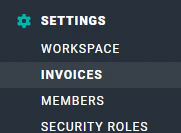 Figure 1 - **Invoices** is the Second Option in the Settings Area
### Invoice Settings
The first section is **Invoice Settings** (Figure 2) which includes the settings that will be applied to all invoices, including invoice street address and the logo to be applied to each invoice. These settings can not be overridden on a per-invoice basis.
Figure 1 - **Invoices** is the Second Option in the Settings Area
### Invoice Settings
The first section is **Invoice Settings** (Figure 2) which includes the settings that will be applied to all invoices, including invoice street address and the logo to be applied to each invoice. These settings can not be overridden on a per-invoice basis.
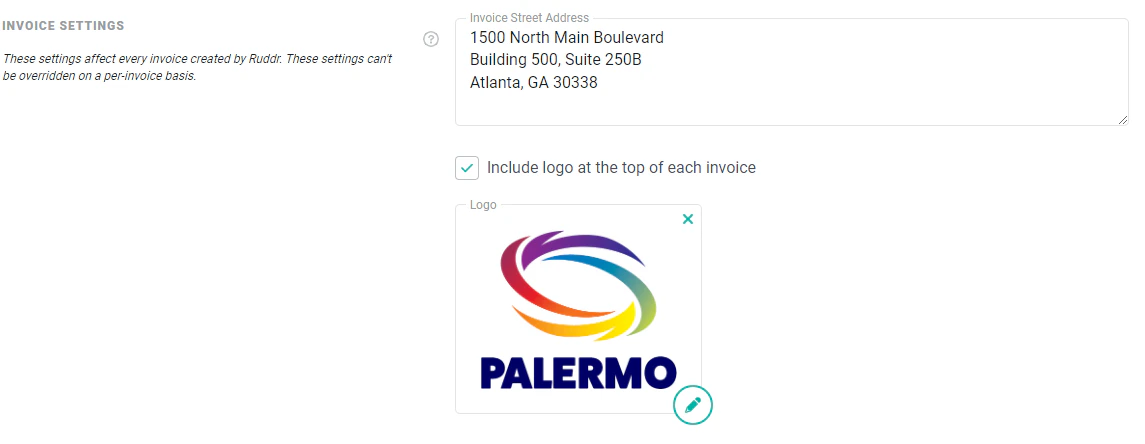 Figure 2 - Manage Default Invoice Settings
### Basic Invoice Defaults
The second section is **Basic Invoice Defaults** (Figure 3) and here you can set the default terms, tax rate, and invoice note for the workspace. Tax rates can be configured in the Custom Data screen within Workspace Settings. The default tax rate can then be inherited or overridden at the client and project levels.
Figure 2 - Manage Default Invoice Settings
### Basic Invoice Defaults
The second section is **Basic Invoice Defaults** (Figure 3) and here you can set the default terms, tax rate, and invoice note for the workspace. Tax rates can be configured in the Custom Data screen within Workspace Settings. The default tax rate can then be inherited or overridden at the client and project levels.
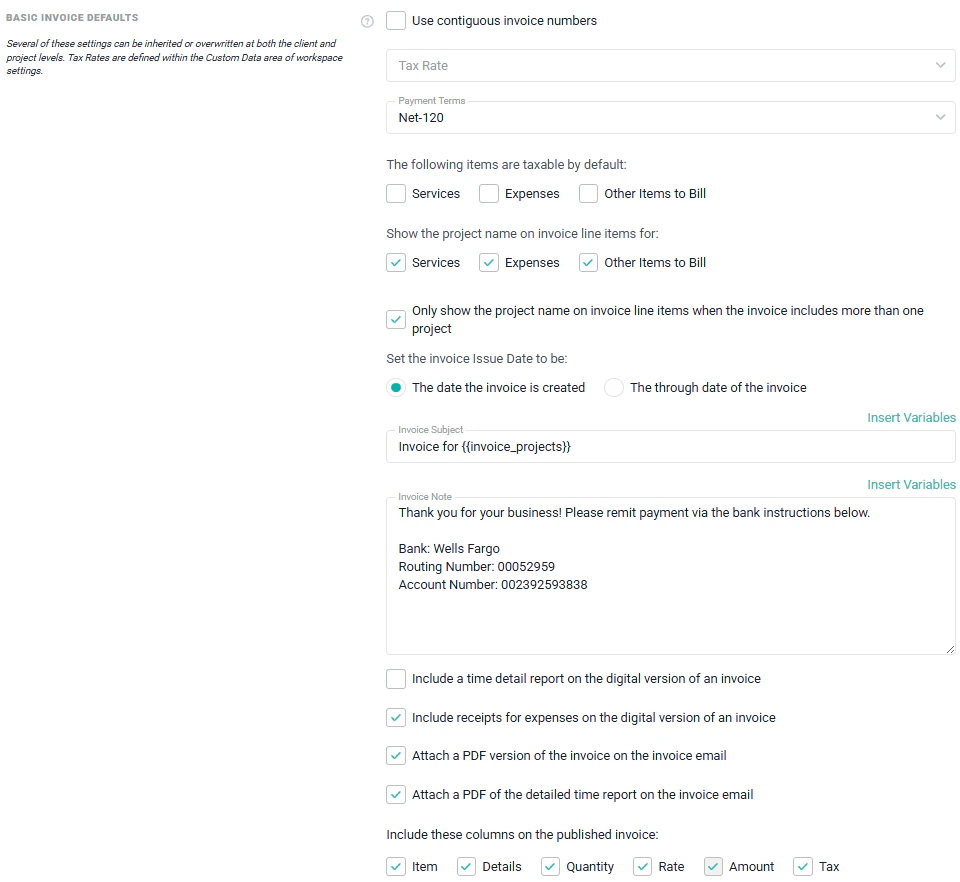 Figure 3 - Specify Default Invoice Settings for the Workspace
In this section, you can specify whether or not you want Ruddr to enforce contiguous invoice numbers. When this setting is checked, Ruddr will look for the first available invoice number from the beginning of the current invoice seeding. If an invoice is deleted, Ruddr will re-use the number in an effort to maintain a contiguous list of invoice numbers in the workspace.
When draft invoices are created, Ruddr generates an Issue Date based on either the date the invoice is created or the "through date" of the invoice. The through date is the date through which services are included. This date is determined by the end date specified when generating the invoice from the [Ready to Bill](/billing/ready-to-bill) screen. Here in the Invoice settings area, you can specify which date you want Ruddr to use for the Issue Date.
Also in this section, you can also specify the default tax treatment for Services, Expenses, and / or Other Items to Bill. This is particularly useful in countries where certain types of revenue items are always taxable. Ruddr will automatically apply the default tax rate for those line items when an invoice is created.
By default, Ruddr will display the project name in the Details of each line item on an invoice. This may be appropriate on invoices that contain line items associated with more than one project. You can change this configuration here by setting whether or not the project name displays by default for Services, Expenses, and / or Other Items.
#### Using Invoice Variables
The Basic Invoice Defaults section introduces invoice variables. Invoice variables are common fields found on an invoice that can be applied to various text fields on an invoice, and as described below, in the invoice email that you send to clients.
In this section, you can include invoice variables in the Invoice Subject field as well as the Invoice Note field. By clicking the **Invoice Variables** link above the setting text box, you can insert an invoice variable (Figure 4) at any point within the text of the field. You can either check the box next to any variable(s) you wish to include at the point where your cursor currently is in the field, or you can click the clipboard icon next to any variable to copy the variable name for inserting at any point in the text.
Figure 3 - Specify Default Invoice Settings for the Workspace
In this section, you can specify whether or not you want Ruddr to enforce contiguous invoice numbers. When this setting is checked, Ruddr will look for the first available invoice number from the beginning of the current invoice seeding. If an invoice is deleted, Ruddr will re-use the number in an effort to maintain a contiguous list of invoice numbers in the workspace.
When draft invoices are created, Ruddr generates an Issue Date based on either the date the invoice is created or the "through date" of the invoice. The through date is the date through which services are included. This date is determined by the end date specified when generating the invoice from the [Ready to Bill](/billing/ready-to-bill) screen. Here in the Invoice settings area, you can specify which date you want Ruddr to use for the Issue Date.
Also in this section, you can also specify the default tax treatment for Services, Expenses, and / or Other Items to Bill. This is particularly useful in countries where certain types of revenue items are always taxable. Ruddr will automatically apply the default tax rate for those line items when an invoice is created.
By default, Ruddr will display the project name in the Details of each line item on an invoice. This may be appropriate on invoices that contain line items associated with more than one project. You can change this configuration here by setting whether or not the project name displays by default for Services, Expenses, and / or Other Items.
#### Using Invoice Variables
The Basic Invoice Defaults section introduces invoice variables. Invoice variables are common fields found on an invoice that can be applied to various text fields on an invoice, and as described below, in the invoice email that you send to clients.
In this section, you can include invoice variables in the Invoice Subject field as well as the Invoice Note field. By clicking the **Invoice Variables** link above the setting text box, you can insert an invoice variable (Figure 4) at any point within the text of the field. You can either check the box next to any variable(s) you wish to include at the point where your cursor currently is in the field, or you can click the clipboard icon next to any variable to copy the variable name for inserting at any point in the text.
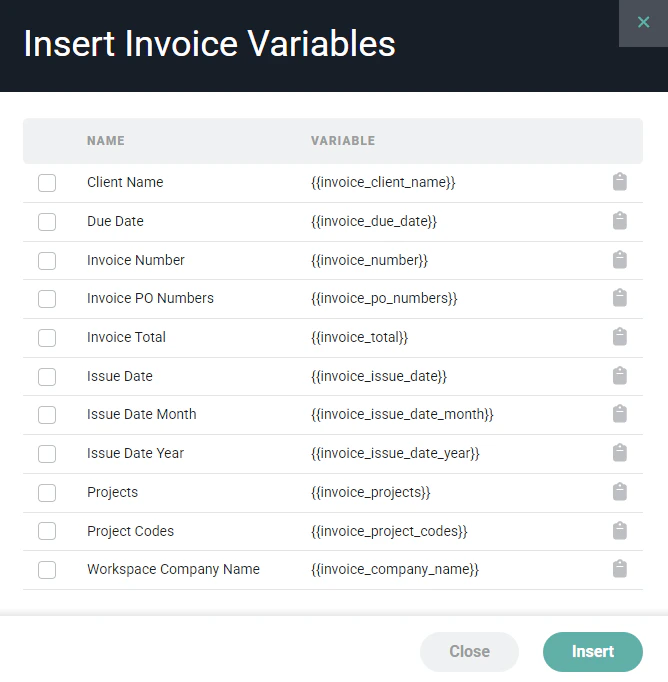 Figure 4 - Insert Invoice Variables into Invoice Fields to Standardize Invoice Content
By inserting an invoice variable, Ruddr will interpret the value of the variable for each particular invoice and will include that value in the content, as specified in the default settings. This text can always be edited on a draft invoice, but will be the default value when invoices are created.
When a client receives an invoice via Ruddr, that email can include both a PDF version of the invoice and a link to a web view of the invoice. In this section of Invoice Settings, you can set defaults to control whether or not a detailed time report of hours worked will available from the web view and whether or not receipts for expenses on the invoice will be made available. You can also set defaults controlling the PDF attachment of the invoice and / or the detailed time report to the invoice email.
Lastly, you can set the default list of invoice columns to include on the published invoice.
Aside from the contiguous invoice numbers settings, all of the settings in this section can be overridden on any invoice. Note that these invoice details will be automatically inherited by each client in the workspace or you can override these details at either the client level or the individual project level.
### Time Presentation Defaults
The settings in the **Time Presentation Defaults** section (Figure 5) allow you to set defaults for how time-entry, invoice line items display on invoices. Time entries can either be shown in detail or they can be grouped.
If you select the **Group time entries on invoices** option (Figure 5), you will have the option to group by project, project role, project role and person, project task, project task and person, or just person.
Figure 4 - Insert Invoice Variables into Invoice Fields to Standardize Invoice Content
By inserting an invoice variable, Ruddr will interpret the value of the variable for each particular invoice and will include that value in the content, as specified in the default settings. This text can always be edited on a draft invoice, but will be the default value when invoices are created.
When a client receives an invoice via Ruddr, that email can include both a PDF version of the invoice and a link to a web view of the invoice. In this section of Invoice Settings, you can set defaults to control whether or not a detailed time report of hours worked will available from the web view and whether or not receipts for expenses on the invoice will be made available. You can also set defaults controlling the PDF attachment of the invoice and / or the detailed time report to the invoice email.
Lastly, you can set the default list of invoice columns to include on the published invoice.
Aside from the contiguous invoice numbers settings, all of the settings in this section can be overridden on any invoice. Note that these invoice details will be automatically inherited by each client in the workspace or you can override these details at either the client level or the individual project level.
### Time Presentation Defaults
The settings in the **Time Presentation Defaults** section (Figure 5) allow you to set defaults for how time-entry, invoice line items display on invoices. Time entries can either be shown in detail or they can be grouped.
If you select the **Group time entries on invoices** option (Figure 5), you will have the option to group by project, project role, project role and person, project task, project task and person, or just person.
 Figure 5 - Opt to Group Time Entries in the Invoice by Default
If you select the **Show all time entries on invoices** option (Figure 6) you will have the option to include Date, Project Role, Task, Person, and Notes on each invoice line item.
Figure 5 - Opt to Group Time Entries in the Invoice by Default
If you select the **Show all time entries on invoices** option (Figure 6) you will have the option to include Date, Project Role, Task, Person, and Notes on each invoice line item.
 Figure 6 - Show All Time Entries on the Invoice by Default
These default settings can be overridden on a per invoice basis.
### Expense Presentation Defaults
The **Expense Presentation Defaults** section (Figure 7) of the Invoice Settings allows you to configure the default invoice line item format for expense entries. Expense entries can either be shown in detail or they can be grouped.
If you select the **Group expense items on invoices** option (Figure 7), you will have the option to group by project, expense category, category and person, or just person.
Figure 6 - Show All Time Entries on the Invoice by Default
These default settings can be overridden on a per invoice basis.
### Expense Presentation Defaults
The **Expense Presentation Defaults** section (Figure 7) of the Invoice Settings allows you to configure the default invoice line item format for expense entries. Expense entries can either be shown in detail or they can be grouped.
If you select the **Group expense items on invoices** option (Figure 7), you will have the option to group by project, expense category, category and person, or just person.
 Figure 7 - Opt to Group Expenses on Invoices by Default
If you select the **Show all expense items on invoices** option (Figure 8) you will have the option to include date, category, vendor, person, and notes on each invoice line item.
Figure 7 - Opt to Group Expenses on Invoices by Default
If you select the **Show all expense items on invoices** option (Figure 8) you will have the option to include date, category, vendor, person, and notes on each invoice line item.
 Figure 8 - Show All Expense Items on Invoices by Default
These default settings can be overridden on a per invoice basis.
### Time Report Defaults
If you elect to **Provide a time detail report on the digital version of an Invoice** in the Basic Invoice Defaults section (Figure 3), you can configure the report format using the **Time Report Defaults** section (Figure 9). You can control the grouping of time entries as well as the specific columns to include in the detailed time report. Note that any changes to this setting will apply to *future* invoices.
Figure 8 - Show All Expense Items on Invoices by Default
These default settings can be overridden on a per invoice basis.
### Time Report Defaults
If you elect to **Provide a time detail report on the digital version of an Invoice** in the Basic Invoice Defaults section (Figure 3), you can configure the report format using the **Time Report Defaults** section (Figure 9). You can control the grouping of time entries as well as the specific columns to include in the detailed time report. Note that any changes to this setting will apply to *future* invoices.
 Figure 9 - Configure the Detail in the Time Report to be Sent with Invoices (if specified)
### Invoice Email Defaults
The next Invoice Settings section is **Invoice Email Defaults** (Figure 10). These settings will applied when sending invoices to customers via Ruddr. These settings include the From Name, Reply To email address, and the Body of the email message. Each of these defaults can be overridden on a per-invoice basis.
Here, you can also apply [Invoice Variables](#using-invoice-variables). Clicking on the **Invoice Variables** link just above either of the Invoice Email Subject or Invoice Email Body fields will allow you to insert common invoice variables (Figure 4) into the text. As draft invoices are generated, the values associated with the variables will be included in the text.
Figure 9 - Configure the Detail in the Time Report to be Sent with Invoices (if specified)
### Invoice Email Defaults
The next Invoice Settings section is **Invoice Email Defaults** (Figure 10). These settings will applied when sending invoices to customers via Ruddr. These settings include the From Name, Reply To email address, and the Body of the email message. Each of these defaults can be overridden on a per-invoice basis.
Here, you can also apply [Invoice Variables](#using-invoice-variables). Clicking on the **Invoice Variables** link just above either of the Invoice Email Subject or Invoice Email Body fields will allow you to insert common invoice variables (Figure 4) into the text. As draft invoices are generated, the values associated with the variables will be included in the text.
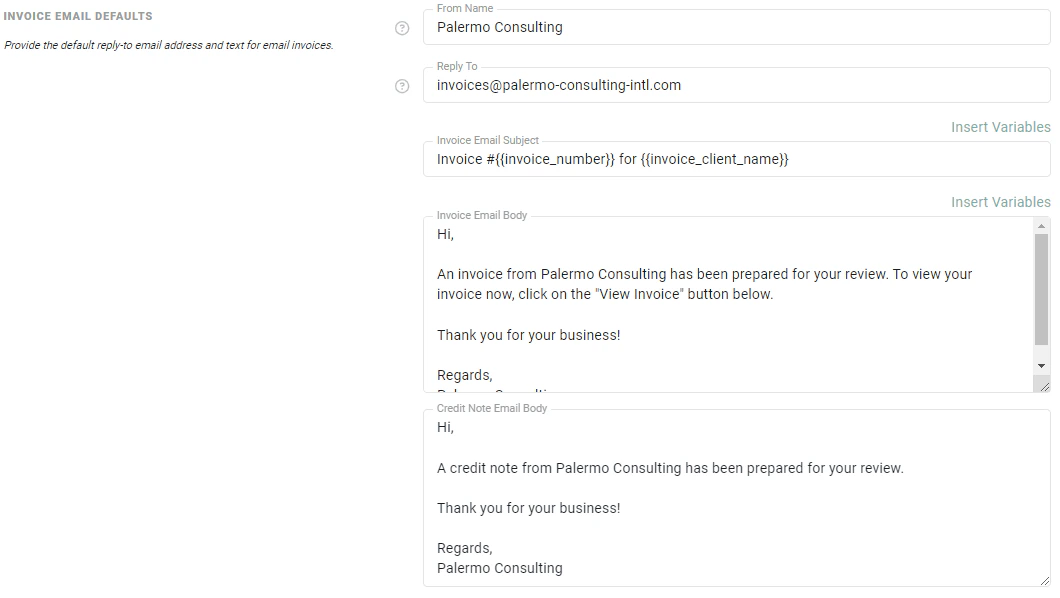 Figure 10 - Set Default Invoice Email Settings
### Ad-hoc Invoices
Ad-hoc invoices are invoices that are created "from scratch", as opposed to invoices that are created from the [Ready to Bill screen](/billing/ready-to-bill). In Ruddr, ad-hoc invoices should very rarely be created, as you will want to generate invoices from transactional data on your projects. As such, you have the ability to restrict members from creating ad-hoc invoices by disabling the **Allow ad-hoc invoice creation** setting (Figure 11) in the Invoices settings area of workspace settings.
Figure 10 - Set Default Invoice Email Settings
### Ad-hoc Invoices
Ad-hoc invoices are invoices that are created "from scratch", as opposed to invoices that are created from the [Ready to Bill screen](/billing/ready-to-bill). In Ruddr, ad-hoc invoices should very rarely be created, as you will want to generate invoices from transactional data on your projects. As such, you have the ability to restrict members from creating ad-hoc invoices by disabling the **Allow ad-hoc invoice creation** setting (Figure 11) in the Invoices settings area of workspace settings.
 Figure 11 - Allow / Prevent Ad-hoc Invoice Creation in Your Workspace
When this setting is disabled, the Create Invoice button found on the [Invoices](/billing/invoices-list) list screen will not be available.
### Workspace Accounting Integration
If the Multiple Accounting Integrations feature is enabled, there will be an additional setting available in the Invoices section of workspace settings. Here, you will find an **Accounting Integration** setting (Figure 12). Here, you will specify the default accounting integration to use for the workspace.
Figure 11 - Allow / Prevent Ad-hoc Invoice Creation in Your Workspace
When this setting is disabled, the Create Invoice button found on the [Invoices](/billing/invoices-list) list screen will not be available.
### Workspace Accounting Integration
If the Multiple Accounting Integrations feature is enabled, there will be an additional setting available in the Invoices section of workspace settings. Here, you will find an **Accounting Integration** setting (Figure 12). Here, you will specify the default accounting integration to use for the workspace.
 Figure 12 - Set a Default Workspace Accounting Integration
The default workspace accounting integration will be used for invoices that are generated for projects that are not associated with a business unit.
Figure 12 - Set a Default Workspace Accounting Integration
The default workspace accounting integration will be used for invoices that are generated for projects that are not associated with a business unit.